Microsoft Teams Integration
Get Statusbrew alerts in a Microsoft Teams channel, including a link to each post once it is live on the network.
Microsoft Teams integration is available on the Standard plan and above. See the full feature comparison.
How Does The Microsoft Teams Integration Work?
You connect a Teams channel to Statusbrew once. Then you create notification rules that send an alert to that channel when something happens, such as a post being published, a post needing approval or a new message arriving.
Keep people who don't use Statusbrew in the loop on what gets published.
Share approval requests with a client in a shared Teams channel.
Get notified about new messages, comments and mentions so your team replies faster.
Who Can Do This?
Only Owners and Admins can add a Teams connector and create notification rules.
Step 1: Create A Webhook In Teams With Workflows
Teams gives you a webhook URL that Statusbrew uses to post into the channel. Microsoft now creates these with Workflows (the old Connectors option has been retired).
In Microsoft Teams, go to the channel where you want the alerts. You can also create a new channel just for Statusbrew.
Click More options (three dots) next to the channel name and select Workflows.
Search for the template Send webhook alerts to a channel and select it.
Choose the Team and Channel the alerts should post to, then click Save.
On the workflow's details page, copy the webhook URL.
You need a work or school Microsoft Teams account. See Microsoft's guide: Create incoming webhooks with Workflows for Microsoft Teams.
Step 2: Add The Connector In Statusbrew
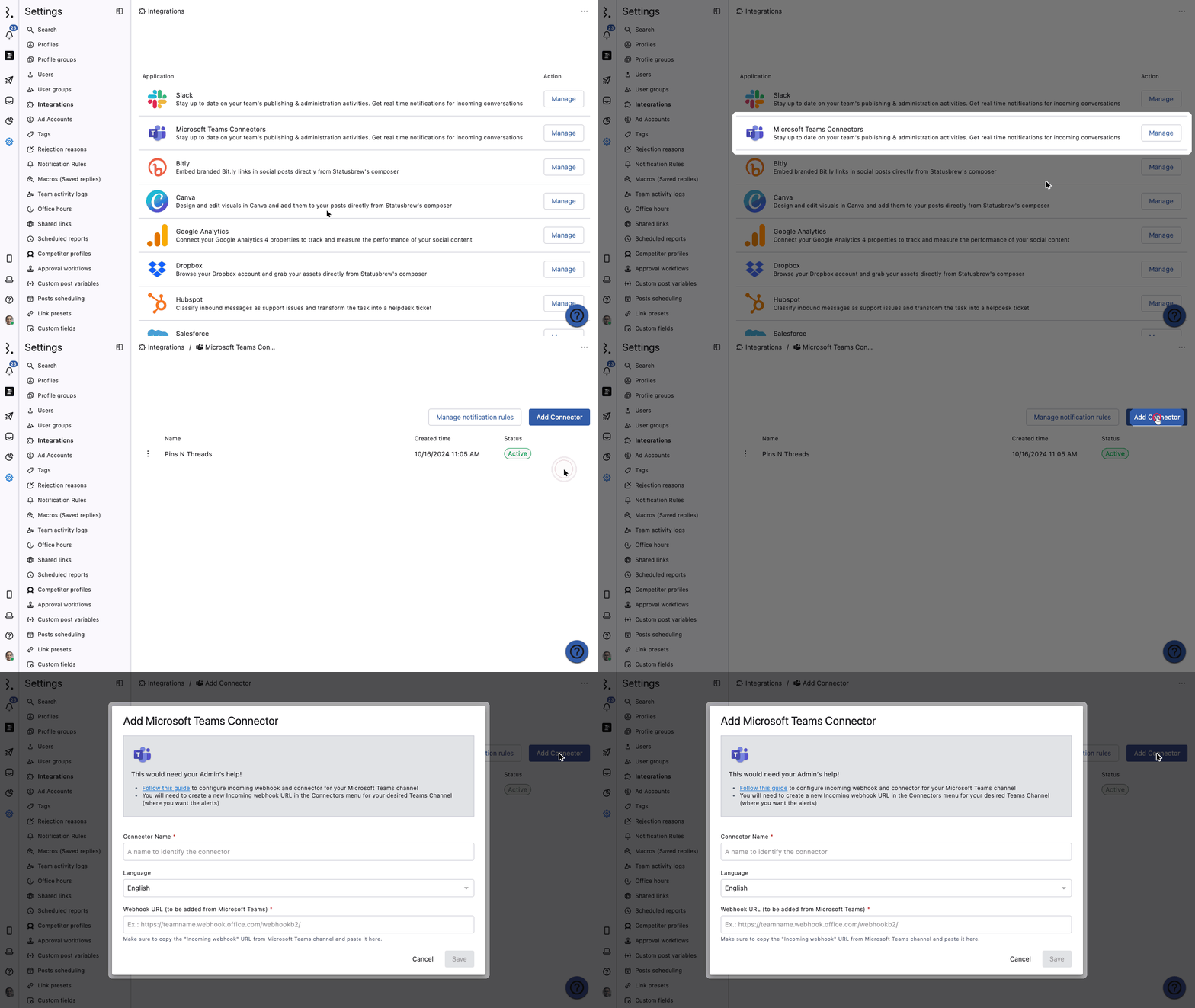
Go to Settings → Integrations.
Click Manage beside Microsoft Teams Connectors.
Click Add Connector.
Enter a Connector Name, pick the Language for the alerts and paste the Webhook URL you copied from Teams.
Click Save.
The connector appears in the list with its created time and an Active status.
Step 3: Create A Rule That Sends Teams Alerts
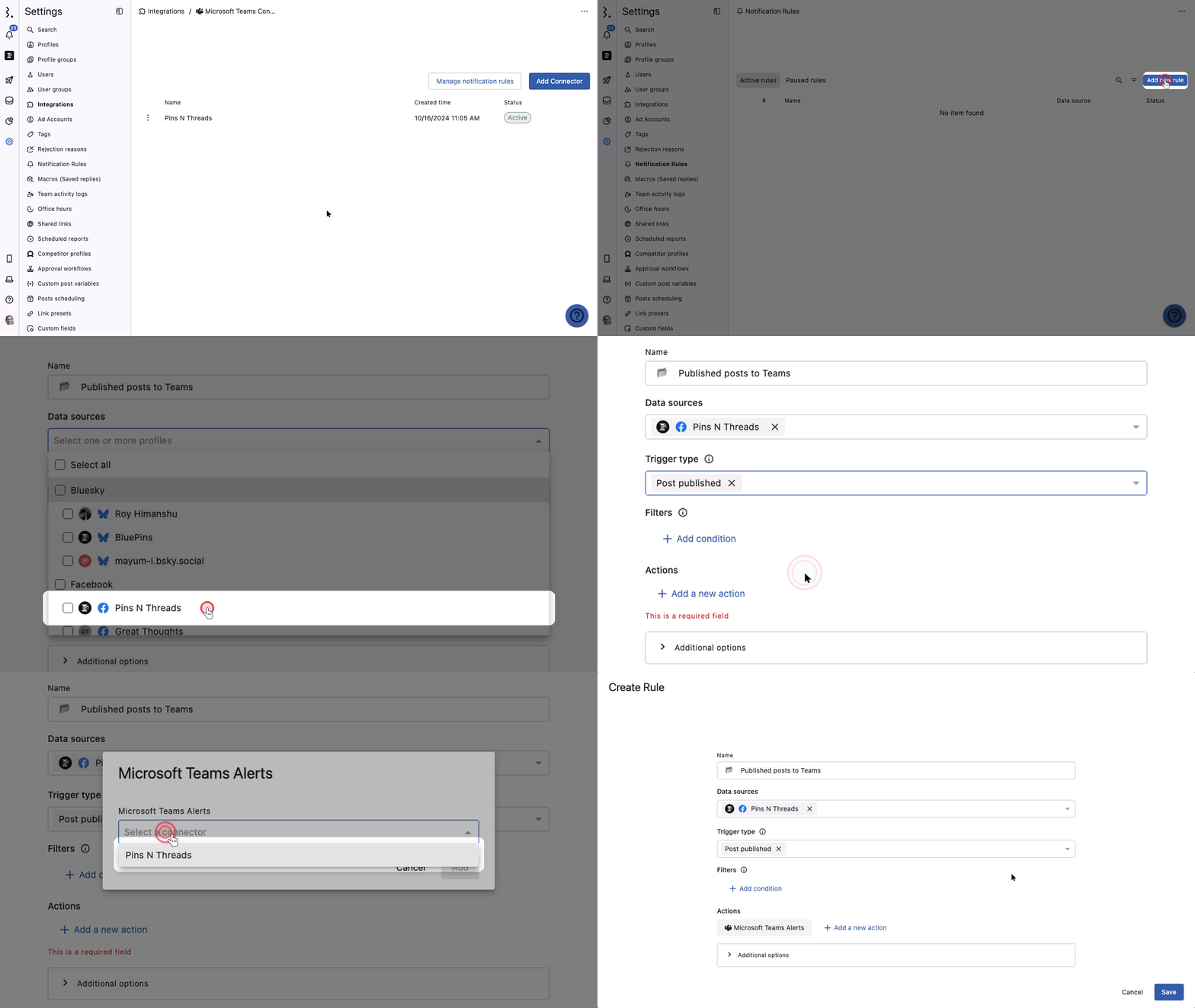
On the Teams connectors page, click Manage notification rules. This opens Settings → Notification Rules.
Click Add new rule.
Enter a Name and pick the profiles in Data sources.
In Trigger type, pick what should send an alert, for example Post published. All triggers in one rule must come from the same family: Message, Conversation, Post or Channel.
Add Filters with Add condition if you only want some of these events.
Click Add a new action → Microsoft Teams Alerts, choose your connector in Select a connector and click Add.
Click Save.
To limit when a rule acts, open Additional options and set the Time zone, the hours it works in (Add hours) or an Active period with a start and end time. Outside those times the rule stays active but sends no alerts.
To send different alerts to different Teams channels, add a connector for each channel and create a rule for each one.
What The Alert Shows For Published Posts
When a rule uses the Post published trigger, the Teams alert includes a link that opens the live post on the network, labelled by network (for example View on LinkedIn). Your team can open the post from Teams and start engaging with it straight away.
The link appears only when the network gives Statusbrew a link to the live post. If it doesn't, the alert is still sent, without the link.
Manage Your Teams Alerts
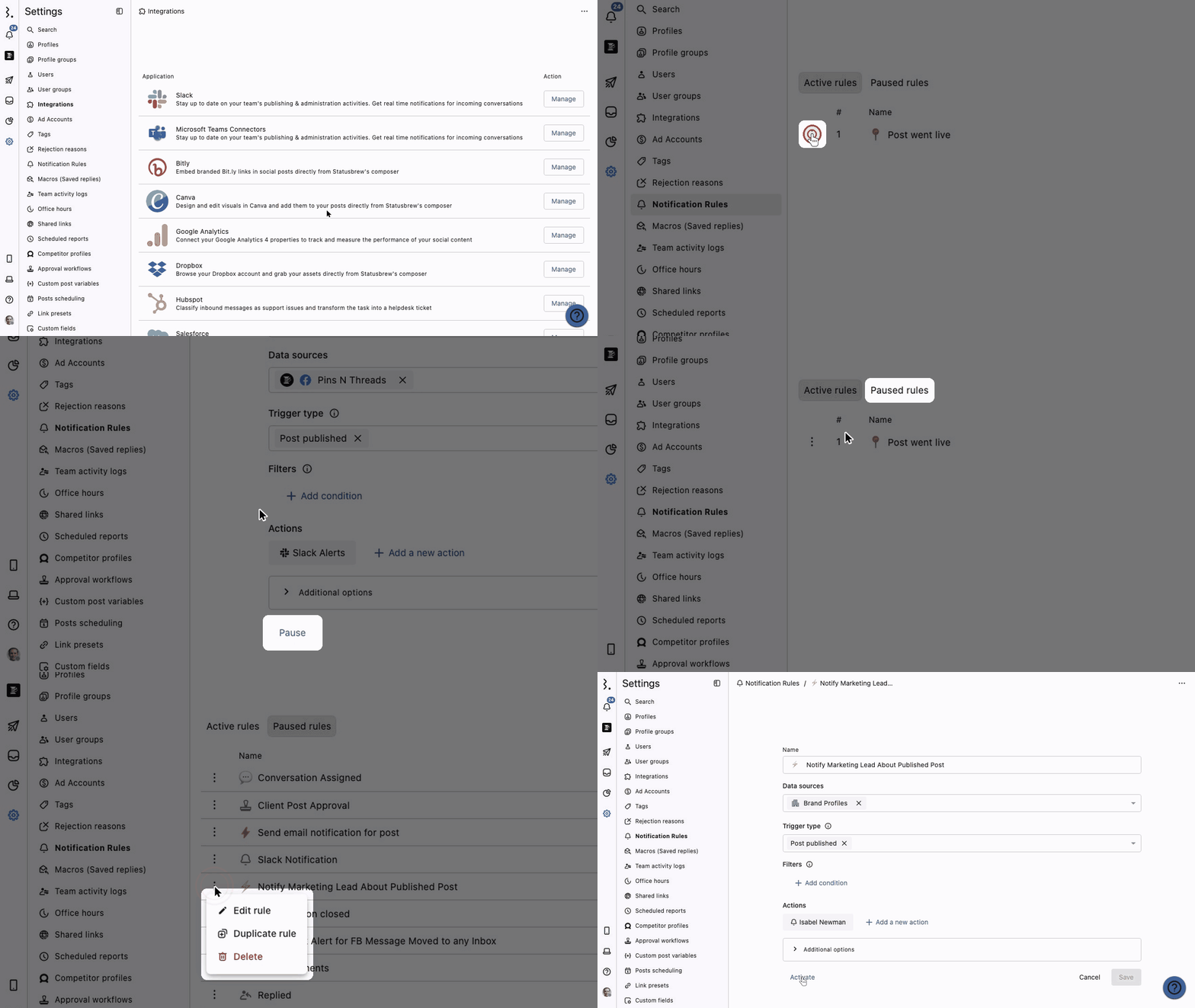
Go to Settings → Notification Rules. Rules that send alerts are on the Active rules tab, paused ones on the Paused rules tab.
To find a rule, use the search icon. Use the filter icon to show rules from the whole Organization or only the Current space.
Click More (three dots) beside a rule and select Edit rule, Duplicate rule or Delete.
Pause Or Reactivate A Rule
On the Active rules tab, click More (three dots) beside the rule → Edit rule.
Click Pause at the bottom of the rule, then click Save. The rule moves to the Paused rules tab and stops sending alerts.
To turn it back on, open the Paused rules tab, click More (three dots) beside the rule → Edit rule → Activate, then click Save.
To stop alerts for a while, pause the rule instead of deleting it. You keep its triggers, filters and actions for later.
Manage A Teams Connector
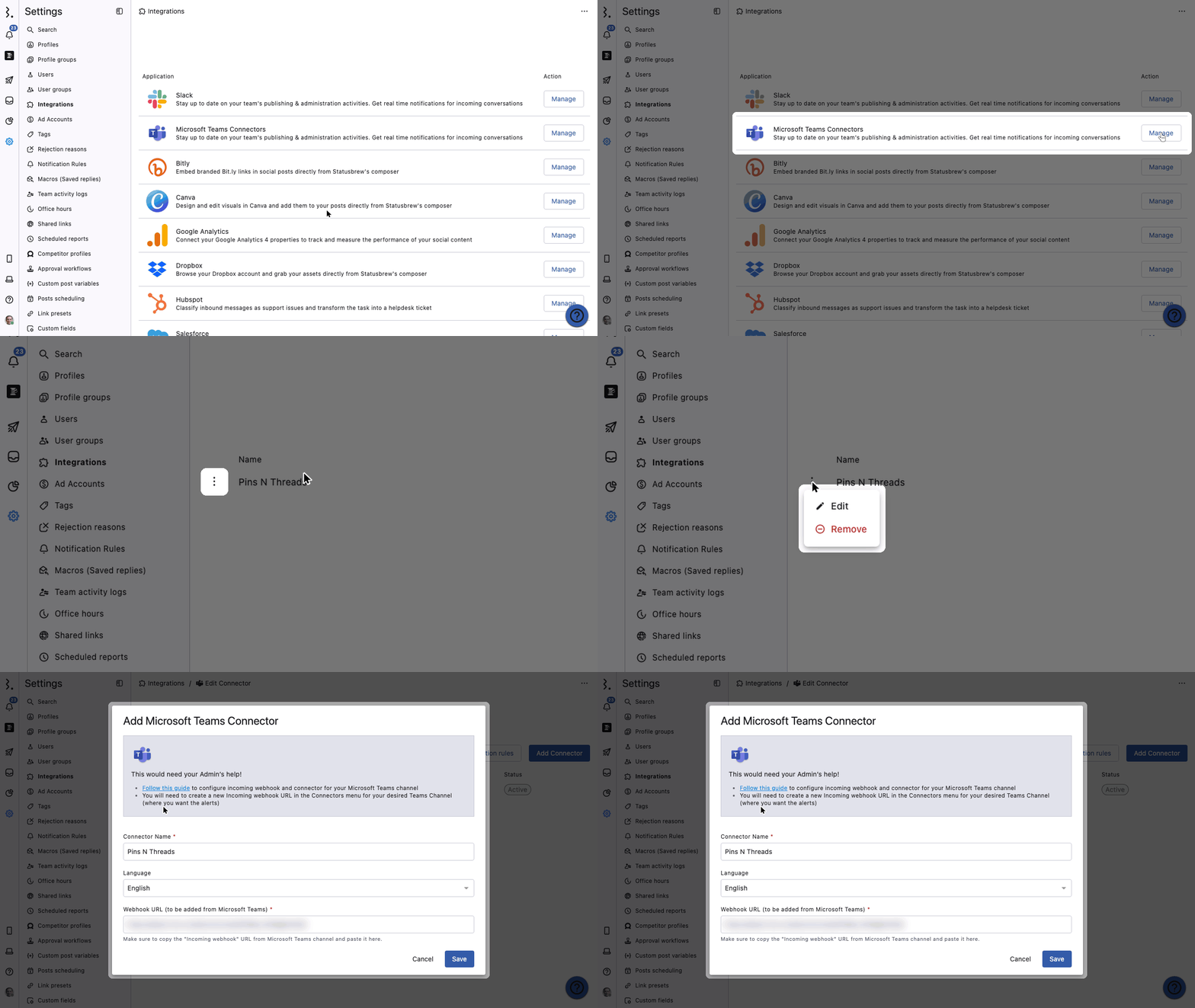
Go to Settings → Integrations and click Manage beside Microsoft Teams Connectors.
Click More (three dots) beside the connector and select Edit to change its name, language or webhook URL in the Edit Connector form, or Remove to delete it.
Removing a connector stops every alert that uses it.
FAQs
Why Doesn't My Teams Alert Show A Link To The Post?
The link only appears for posts that are already published and that the network returned a link for. Alerts about posts that aren't published yet, such as approval requests, never include it.
Do Slack Alerts Include The Live Post Link Too?
Yes. A Slack alert for a published post shows Open in Statusbrew and View Post, which opens the live post on the network.
Can I Send Alerts To More Than One Teams Channel?
Yes. Add a connector for each channel, then create a rule for each connector.
Which Events Can Send A Teams Alert?
Any notification rule trigger. Triggers come in four families: Message (Message replied), Conversation (for example Conversation assigned or Conversation closed), Post (for example Post published or Post failed) and Channel (for example Channel disconnected or Channel disconnect warning). One rule uses triggers from one family. See Set Up Notification Rules for the full list.
Can I Get Alerts In Japanese?
Yes. Pick Japanese in the connector's Language field.